
Water Temperature May Be the Most Overlooked Part of Steelhead Fishing
Steelhead anglers talk constantly about river levels, water clarity, rainfall, bait selection and fishing pressure.
But there is another variable that I believe deserves just as much attention: water temperature. After more than three decades of fishing Great Lakes steelhead, I’ve learned that the temperature of the river can completely change the fish you’re trying to catch. A steelhead sitting in 50-degree water is not necessarily the same fish behaviorally as one sitting in 35- degree water. Its willingness to move changes. Where it holds changes. How aggressively it responds to a presentation changes. And perhaps most importantly, the size of the strike zone around that fish can
change dramatically.
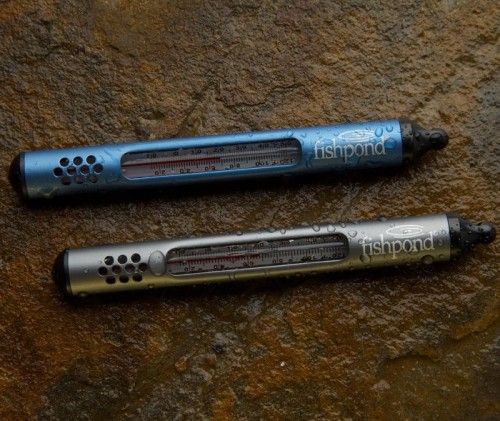
There is science behind that observation as well. Research involving steelhead in Michigan’s Pere Marquette and St. Joseph rivers found a strong relationship between water temperature and upstream movement. That’s why I carry a stream thermometer. Knowing the temperature doesn’t tell me everything about the river, but it tells me a lot about how I should fish it.
50-60°F: Steelhead With an Attitude
When Great Lakes tributaries are in this range, particularly during the fall, you’re often dealing with some of the most aggressive steelhead of the season. These fish may be relatively fresh from the lake. They’re strong, energetic and capable of moving significant distances.
This is when I expect steelhead to occupy faster runs, heads of pools, tailouts, current seams, pocket water, and transitional water between pools and riffles.
This is also when I’m less afraid of showing a steelhead something. Larger spawn bags, beads, jigs and
other presentations can all produce fish. You can make the fish come to you. That becomes increasingly less true as the water gets colder.
45-50°F: One of My Favorite Steelhead Temperatures
If you told me I could choose a temperature range for Great Lakes fall steelhead, this would be right near
the top of my list. The fish still have plenty of energy. They’ll move for a bait. They’ll hold in relatively strong current. And
fresh fish may continue moving through the system when river conditions are right.
But this is also where I begin paying closer attention to presentation. A natural drift becomes increasingly important. I’ve said for years: The quality of your drift determines your success. Temperature doesn’t change that rule. It makes the rule even more important. If you want a deeper explanation of how I rig and fish these presentations, see my Great Lakes Steelhead Float Fishing guide covering rods, floats, shot patterns and leaders.
40-45°F: Start Tightening Everything Up
This is an important transition. The fish certainly haven’t stopped biting. Far from it. But I start thinking differently. Instead of asking, “How do I attract that fish?” I start asking, “How do I put my offering directly in front of that fish?” As the water cools, I’m increasingly interested in moderate current, seams, deeper runs and the softer edges surrounding faster water.
I’ll also begin experimenting with smaller presentations: smaller spawn bags, smaller beads, smaller jigs, lighter leaders when conditions permit, more precise shot patterns, and extremely controlled drifts. You don’t necessarily need to convince a steelhead to travel three feet when you can put the bait six inches from its face.
35-40°F: Your Strike Zone Is Shrinking
Now we’re getting into genuine cold-water steelheading. This is where I think many anglers make a mistake. They continue fishing the same water, with the same presentation, at the same pace they used when the river was 48 degrees. The river changed. So should you. Look harder at deep pools, inside bends, slow seams, current breaks, soft edges, deep slots and wintering water. And slow yourself down. I would rather make ten excellent drifts through a six-foot-wide zone holding fish than make fifty mediocre drifts covering water the fish don’t want to occupy.
32-35°F: Put It on Their Nose
This is where precision becomes everything. A steelhead can absolutely be caught in water barely above freezing. I’ve done it countless times. But I don’t expect that fish to behave like an October steelhead in 50-degree water. Its world has gotten smaller. That means my presentation needs to get smaller too. Not necessarily every single time – there are always exceptions in steelhead fishing – but it’s a very good starting point.
Small spawn bags. Small beads. Small jigs. Small hooks. Lighter leaders when water clarity requires it. And perhaps most importantly: Put the bait where the fish doesn’t have to expend much energy to eat it. You may have made 20 drifts past a fish. But did you actually make one drift through its strike zone? Those aren’t necessarily the same thing.
Why Great Lakes Steelhead Often Respond to Smaller Offerings
This leads into a theory I’ve developed after decades of fishing steelhead. Great Lakes anglers are famous for fishing small: small hooks, small spawn bags, small beads, small jigs and fine leaders. Compare that with some steelhead techniques traditionally used elsewhere, particularly in the Pacific
Northwest, and the difference can be substantial. Why? I don’t believe there’s one answer. Fishing pressure, water clarity, forage, river size and regional fishing traditions all play a role. But I believe water temperature deserves a place in that discussion. Imagine a Great Lakes steelhead holding in 38- or 40-degree water. That fish doesn’t necessarily want to burn energy chasing something halfway across the river. So instead of asking, “How do I make the fish chase my bait?” ask, “How do I make eating my bait almost effortless?” That’s a very different philosophy, and it’s one of the foundations of how I approach Great Lakes float fishing.
Don’t Look at Temperature Alone
Water temperature isn’t magic. I would never look at a thermometer and decide how I’m going to fish
based solely on that number. I also want to know: Is the river rising or falling? Is it clear or stained? Did we just receive rain? Are fresh fish entering the system? Is the temperature rising or falling? What has the weather done during the previous 24-48 hours? A river at 40 degrees and warming can fish very differently from that same river at 40 degrees and rapidly
cooling. Sometimes the direction of the temperature change matters nearly as much as the number itself. Temperature is part of a larger picture that includes season, flow, fish movement and biological timing.
A One-Five Degree Change Can Change the River
One of the biggest mistakes steelhead anglers make is fishing yesterday’s conditions. Maybe you crushed them yesterday. Same river. Same hole. Same float. Same spawn. Same everything. Except overnight the river dropped five degrees. Now those fish that were sitting at the head of the run may have slid into the pool. Your bait didn’t suddenly stop working. The fish changed. Don’t immediately start digging through your tackle box looking for a magic bait. First ask yourself: Did the fish move?
The Stream Thermometer Is One of the Cheapest Tools You Can Carry Steelhead anglers will spend hundreds of dollars on rods, reels, waders, tackle and electronics – and then walk into a river without knowing its temperature. A simple stream thermometer can tell you something enormously valuable about the fish you’re pursuing. Take the temperature when you arrive. Check it again later, especially during winter.
A river warming from 34 to 37 degrees during the afternoon might not sound significant to us. To a cold-blooded animal, three degrees matters. That small warming trend can change activity and sometimes turn a dead river into a surprisingly productive one.
Great Lakes Steelhead Water Temperature Cheat Sheet
Water Temperature What I’m Thinking 50-60°F Active fish; cover water and don’t be afraid of larger presentations.
45-50°F Excellent range; active fish with a good willingness to move.
40-45°F Tighten the presentation and concentrate on precise drifts.
35-40°F Fish slower water and shrink your strike-zone mentality.
32-35°F Precision; small offerings and put it directly in front of them.
These aren’t laws. Steelhead don’t read charts. I’ve caught aggressive fish in ice water and stubborn fish in seemingly perfect conditions. That’s fishing. The chart is simply a starting point for making better decisions.
Fish the Temperature, Not the Calendar
This might be the most important takeaway from the entire discussion. We tend to think in months: October steelhead. November steelhead. January steelhead. March steelhead. The fish don’t own calendars.
A brutally cold November river can fish like January. A warming February river can suddenly come alive. That’s why I pay attention to what the river is telling me today: temperature, flow, clarity, weather and fish movement.
Put those pieces together and you’re no longer simply hoping you’re standing over steelhead. You’re developing a reason for where you’re fishing and how you’re presenting your bait. And the more often you can do that, the more consistently you’re going to put Great Lakes steelhead on the bank.
Roger Hinchcliff
Steelhead Manifesto
